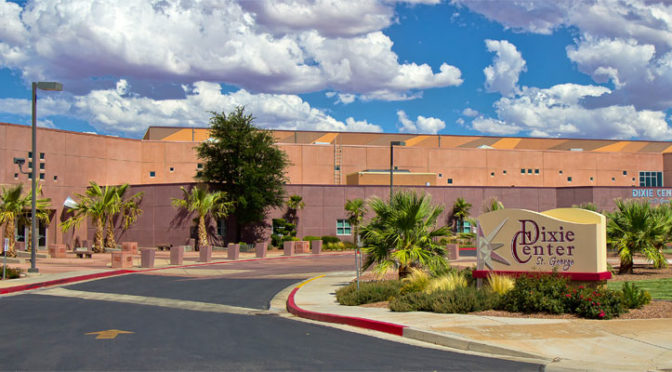
Washington County is seeking proposals from qualified, Utah-licensed architectural firms for the Dixie Convention Center Expansion in St. George, Utah, at 1835 South Convention Center Drive. The selected firm will take the Project from programming verification through construction documents and construction administration. The Project would add about 117,145 square feet of new space to the existing 170,697 square foot Dixie Center. For a copy of the Request for Proposal, respondents may send an email to: nicholle.felshaw@washco.utah.gov. Deadline for Submission of Proposal: 4:00 pm on Friday, October 30, 2026, at the Washington County Commission Office at 111 E Tabernacle, St. George, UT 84770.
Publish on: Sunday, October 18, 2026 Monday, October 19, 2026
Billing: Washington County Commission 111 East Tabernacle St. George, UT 84770 Account #: 1359
Washington County wants residents to know about an important planning effort for the Grand Canyon’s North Rim!
After the Dragon Bravo Fire burned more than 71,000 acres on the North Rim last summer and destroyed cherished buildings, the National Park Service is preparing a plan to guide the area’s long-term recovery. The goal is to rebuild thoughtfully while honoring the North Rim’s history and meeting the needs of visitors, employees, and park operations. The NPS is asking for public input on a draft vision and three preliminary redevelopment concepts. To get involved, review the planning materials on the project website and submit your comments online before the public involvement period closes on November 6, 2026. Virtual and in-person public meetings are also being held throughout October. Click the link to read the plans, find meeting dates, and share your feedback:
Washington County is soliciting proposals from qualified individuals, organizations, or businesses to manage and produce the annual Washington County Rodeo to be held during the Fair in April 2027, under a one-year contract, renewable annually by mutual agreement between the Contractor and the County Commission.
All proposals will be evaluated and scored as follows:
Concept: 30 points
Experience: 30 points
Proposed Budget: 40 points
To be considered, a sealed proposal must be submitted to the County Commission Office on or before 3:00 PM on Monday, October 19, 2026. The outside envelope for the sealed proposal must be labeled “County Rodeo Proposal”. Sealed proposals will be opened at 3:05 PM in the Commission Chambers on October 19, 2026. Awarding of the contract will take place during the October 20, 2026 Commission Meeting. The Washington County Commission reserves the right to reject any or all proposals, or to waive any formality or technicality in any proposal in the best interest of the County.
Washington County of Utah is issuing a Request for Proposals (RFP) to solicit proposals from qualified providers of 911 ambulance services for the unincorporated Santa Clara-Ivins EMS Response Area.
Submission Instructions
Deadline. Proposals must be received by October 19, 2026, at 5:00 pm Mountain Time (stated on the RFP’s cover page). Late proposals will not be considered.
Method. Submit proposals in a sealed envelope marked “RFP – Santa Clara-Ivins EMS Response Area” delivered to the address on the RFP’s cover page.
Questions. All questions must be submitted in writing to the point of contact by the question deadline. Answers will be issued by written addendum to all known proposers. Proposers may not rely on oral statements.
Addenda. The County may modify this RFP by written addendum.
Validity. Proposals must remain valid for 120 days after the submission deadline.
Washington County is soliciting proposals from licensed funeral service establishments located in Washington County that wish to provide cremation services for unclaimed decedents and County-approved indigent decedents at the County’s set rate of $1,000 per decedent, consistent with Utah law and applicable Washington County ordinances and policies. The County is not requesting price proposals. The County intends to enter into an agreement with each responsive and responsible Respondent that meets the requirements of this RFP and agrees to accept the County’s set rate.
The Request for Qualifications (RFQ) will be available from the Washington County Administration Office on Monday, September 28, 2026, and can be requested by emailing Nicholle Felshaw at nicholle.felshaw@washco.utah.gov. To be considered, a proposal must be submitted to the County on or before October 2, 2026. The Washington County Commission reserves the right to reject any or all proposals, or to waive any formality or technicality in any proposal in the best interest of the County.
NOTICE OF VACANCIES AND MIDTERM VACANCY WASHINGTON COUNTY WATER CONSERVANCY DISTRICT
NOTICE is hereby given that there are vacancies on the Washington County Water Conservancy District Board of Trustees. Washington County is the appointing authority for the board.
Available positions are:
Three (3) vacancies which board positions will expire on December 31, 2030. Those who are interested in serving on the Board of Trustees must submit a completed Notice of Candidacy form to the Washington County Commissionon or before November 6, 2026 at 5:00 pm. The Washington County Commission will make the board appointments during the regular county commission meeting held on November 17, 2026 at 4:00 pm.
One (1) midterm vacancy board position will expire on December 31, 2026. Those who are interested in serving on the Board of Trustees must submit a completed Notice of Candidacy form to the Washington County Commissionon or before October 2, 2026 at 5:00 pm. The Washington County Commission will make the board appointment during the regular county commission meeting held on October 6, 2026 at 4:00 pm.
Regular county commission meeting will be located at 111 East Tabernacle, St. George, Utah, or at such later time and date as specified in a publicly posted agenda and notice.
To qualify for appointment to the board, the applicant must meet the following qualifications:
Be a U.S. Citizen; and
Be a registered voter residing in Washington County.
The Notice of Candidacy form is available online above or at the County Commission Office, 111 East Tabernacle, St. George, Utah 84770. The form may be submitted in person at the County Commission office listed above, or by email at sarah.lloyd@washco.utah.gov. Questions may be addressed to Sarah Lloyd at (435) 301-7006.
Gunlock Road between Veyo and Old Highway 91 from September 14th through September 24th, 2026. The road will have up to 15 minute delays between 7 am and 5 pm Monday through Thursday.
Old Highway 91 from Mile Marker 16 to the Ivins/Shivwits boundary (Mile marker 20) from September 28th through October 1st, 2026. The road will have up to 15 minute delays between 7 am and 5 pm Monday through Thursday.
* Dates and times are subject to change based on weather conditions. ** When loose chips are present on the road, please reduce speed to 25 MPH (40 KPH) to avoid windshield damage.
The Fair RFP Deadline for Questions, Proposal Due Date, Anticipated Interviews (if needed), Anticipated Award Date, and the Contract Start Date has been extended.
The original due dates are below:
RFP Issue Date
Sunday, September 13, 2026
Deadline for Questions
Monday, September 28, 2026
Proposal Due Date
Wednesday, September 30, 2026, 5:00 PM
Anticipated Interviews (if needed)
Friday, October 2, 2026
Anticipated Award Date
Tuesday, October 6, 2026
Contract Start Date
Wednesday, October 7, 2026
The Fair RFP Deadline for Questions, Proposal Due Date, Anticipated Interviews (if needed), Anticipated Award Date, and the Contract Start Date has been extended to:
RFP Issue Date
Sunday, September 13, 2026
Deadline for Questions
Monday, October 12, 2026
Proposal Due Date
Tuesday, October 13, 2026, 4:00 PM
Anticipated Interviews (if needed)
Thursday, October 15, 2026
Anticipated Award Date
Tuesday, October 20, 2026
Contract Start Date
Wednesday, October 21, 2026
To obtain a copy of the Request for Proposal (RFP), send an email to Nicholle Felshaw at nicholle.felshaw@washco.utah.gov, or call at (435) 301-7005. Please utilize the new due dates listed above, not the due dates in the original RFP document.
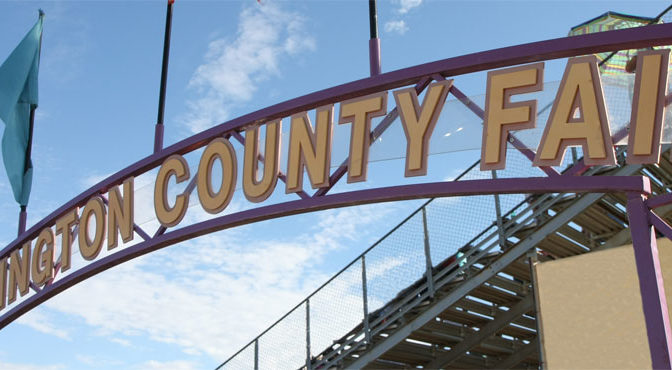
Washington County is soliciting proposals from qualified organizations, associations, or firms to manage and produce the annual Washington County Fair under a one-year contract, renewable annually by mutual agreement between the Contractor and the County Commission.
The County is seeking a partner that will treat the Fair as a community institution, one that reinvests in Washington County, prioritizes local artists, tradespeople, and talent, and works hand-in-hand with the County Commission each year to shape a Fair.
The Request for Proposal (RFP), will be available from the Washington County Administration Office on Monday, September 14, 2026, and can be requested by emailing Nicholle Felshaw at nicholle.felshaw@washco.utah.gov. To be considered, a proposal must be submitted to the County on or before September 30, 2026. The Washington County Commission reserves the right to reject any or all proposals, or to waive any formality or technicality in any proposal in the best interest of the County.
Publish on: September 13, 2026 September 14, 2026 September 15, 2026 September 16, 2026
Billing: Washington County Commission 111 East Tabernacle St. George, UT 84770 Account#: 1359
The intent of Washington County of Utah is to obtain competitive construction proposals from qualified contractors for the physical construction (excluding design) of a new detention basin and associated earthen drainage infrastructure located at: Washington County Legacy Park, 5500 West 700 South, Hurricane, Utah 84737.
To receive consideration and responses to this RFP, the County must receive the proposal no later than 2:00 PM on September 30, 2026 (“Closing Date”). One sealed unbound original and one electronic copy of the proposal should be delivered to the official submission location:
Facsimile or electronic proposals (other than that which accompanies the physical delivery above) will not be accepted. Late proposals will not be considered and will be returned unopened.
Washington County Administration Building will be temporarily closed for scheduled safety drills on the morning of Tuesday, October 27, from 8am to 9am (Mountain). County Services will be closed for that hour.